

Going to the opera is one of those occasions where getting dressed can be part of the pleasure. The good news is that, for most performances in Britain, there is no need to worry about following a complicated set of rules.
At the Royal Opera House, there is no formal dress code for regular performances. Some people enjoy dressing for the occasion, while others sometimes arrive in jeans, work clothes or something altogether more relaxed. Gala performances and opening nights may feel more formal, but Royal Ballet and Opera advises that any specific dress code will be made clear when booking or on the ticket.
At Shibumi though we think it is the perfect opportunity to dress up!

Glyndebourne Festival has a stronger tradition of formal dressing. Evening wear remains part of the Festival experience, while Glyndebourne's autumn season has a smart casual dress code.
For us, that leaves a rather lovely question to answer: not what am I supposed to wear?, but what would I enjoy wearing?
Silk dresses, beautifully cut trousers, statement jackets and full-length coats can all work wonderfully for an evening at the opera. For men, a Shibumi Nehru jacket, blazer or waistcoat offers an individual alternative to conventional evening tailoring.

Is There a Dress Code for the Opera?
For most regular opera performances in Britain, formal evening wear is not compulsory. You can decide how dressed up you would like to be according to the venue, the particular performance and, most importantly, what you feel comfortable wearing.
At the Royal Opera House, audiences are specifically encouraged to wear what they feel comfortable in. Dressing up is welcomed, but it is not required. Gala performances and opening nights may encourage something more special, and any event with a particular dress code should make this clear in advance.
Glyndebourne Festival is different. Dressing for the occasion has been part of the Festival tradition for many years, and evening wear remains traditional. That makes it a particularly good opportunity to enjoy a more dramatic outfit.
There are no rigid rules to follow. Think instead about where you are going, how formal you would like to feel and what you will genuinely enjoy wearing.
What to Wear for a Regular Evening at the Royal Opera House
An ordinary evening at the Royal Opera House can be elegant without feeling overly formal.
For women, silk separates are a particularly easy way to find that balance. An Anya Jacket with Atelier Silk Trousers gives you a beautifully put-together outfit without the feeling of traditional evening dress.
For something softer, try Silk Palazzo Pants with the Willow Silk Top, adding a Bhumi Jacket or Nehru Jacket where you would like another layer. The combination has enough presence for the occasion while remaining comfortable when you will be sitting for much of the evening.
You can also take a more relaxed approach. A Shibumi coat or jacket worn with something as simple as jeans can make an evening feel special without becoming too formal.
For men, a Shibumi Nehru Jacket or Blazer can be worn with your own smart trousers. It is an easy way to introduce colour, silk or embroidery while keeping the rest of the outfit simple.

What to Wear to Glyndebourne Festival
Glyndebourne is one of those occasions where dressing up is very much part of the enjoyment. Evening wear is traditional at the Festival, and the setting lends itself particularly well to a more memorable outfit.
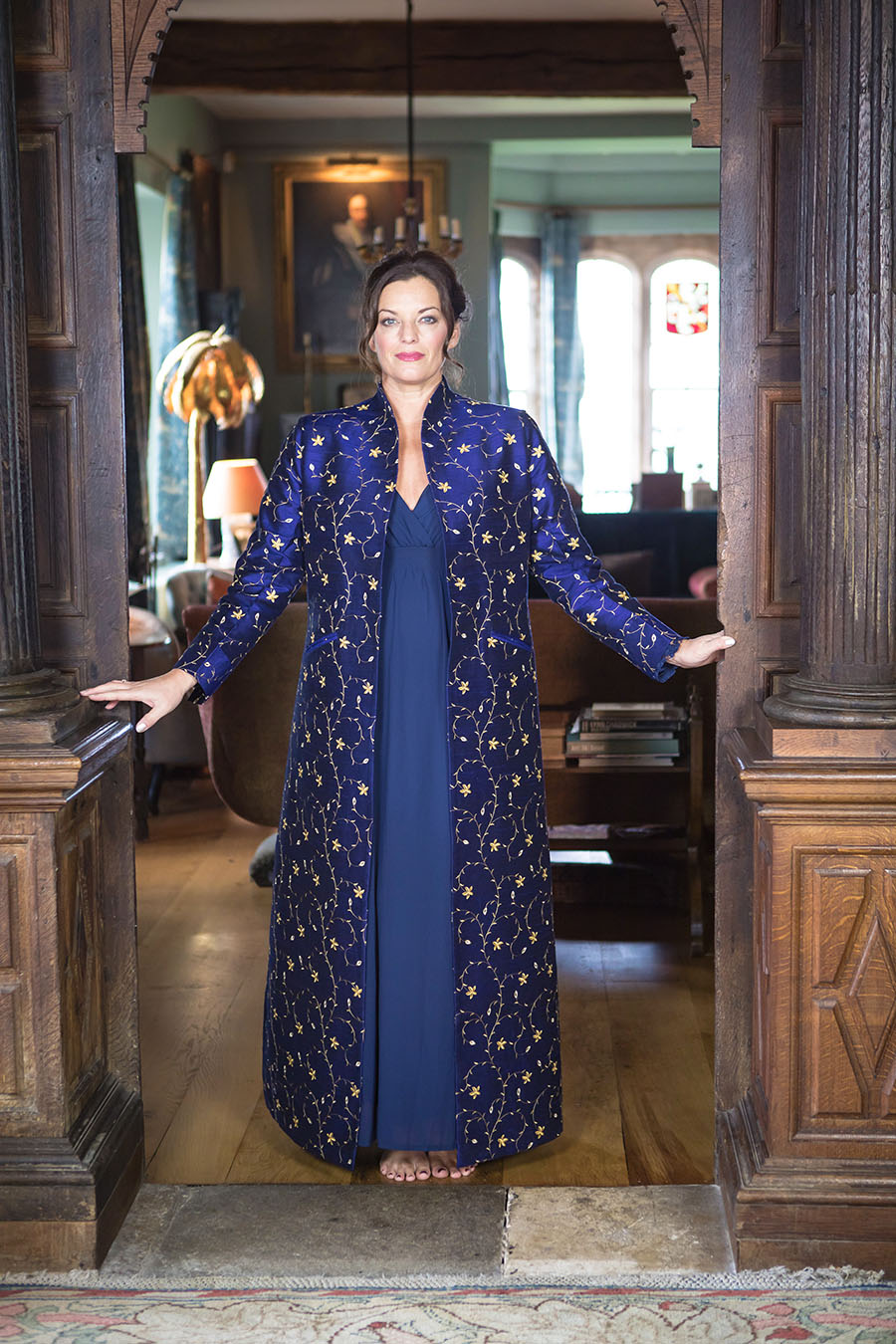
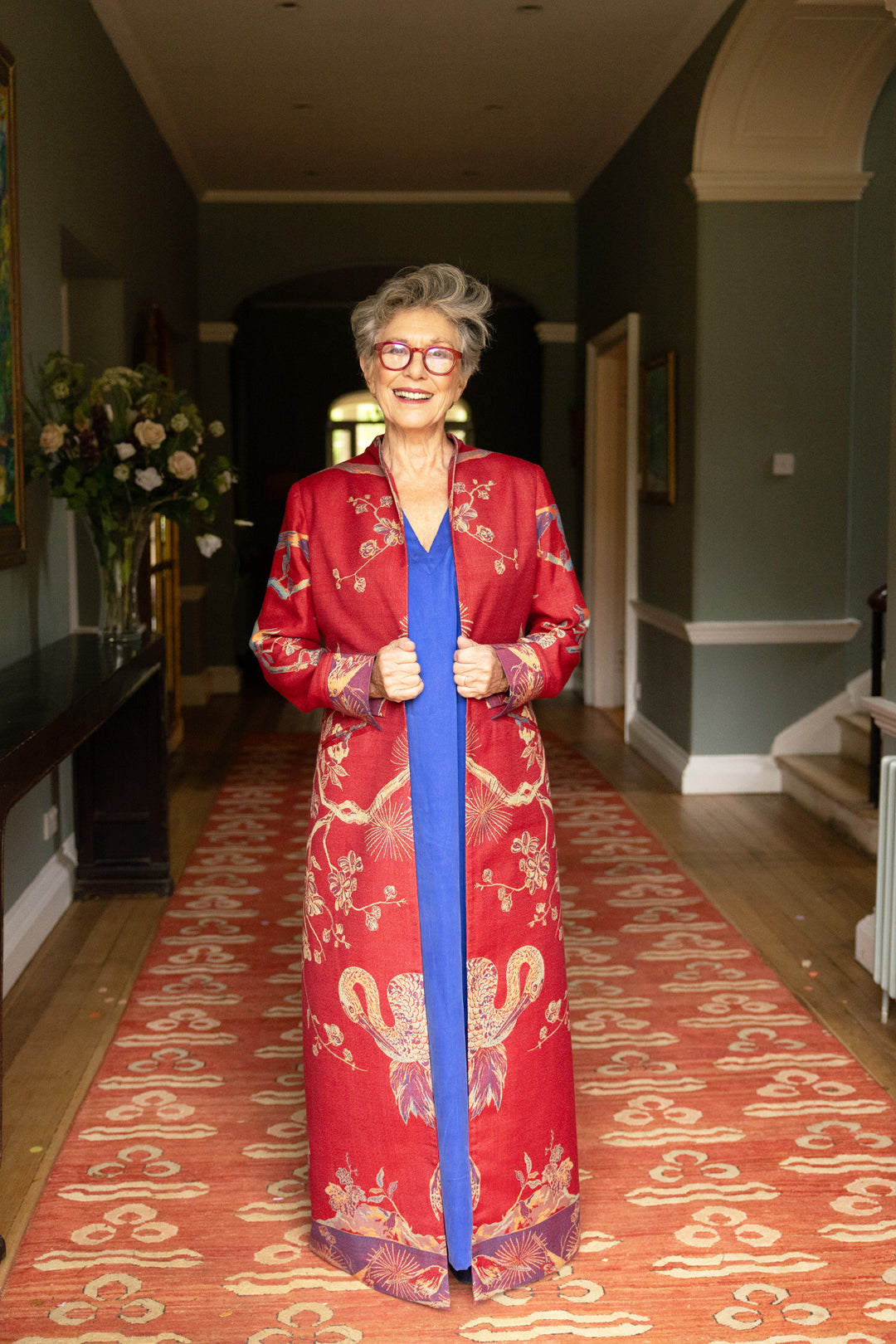
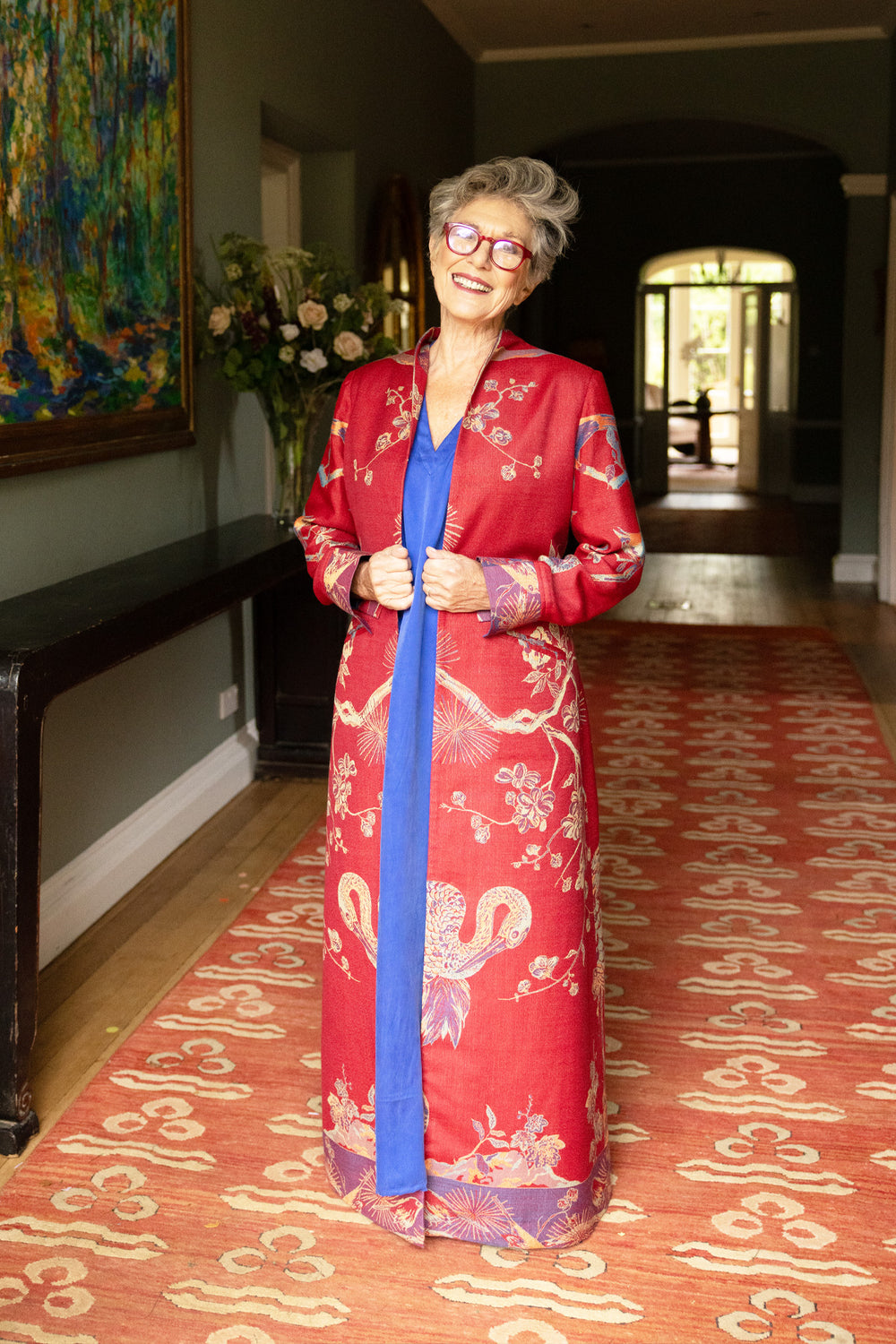
Two Shibumi pieces are particularly suited to the occasion: the Devi Coat and the Aquila Coat.
Both are full length, giving the outfit a sense of occasion without requiring a conventional evening gown. Underneath, Silk Palazzo Pants with the Willow Silk Top work particularly well. Their fluid shape sits beautifully beneath the longer coat and makes a comfortable choice for an extended evening.
The Lucy Dress offers another route. It can be worn as it is, adapted with sleeves where appropriate, or bespoke made at full length for a more traditional evening silhouette.
For men, a Shibumi Nehru Jacket, Blazer or Waistcoat can introduce distinctive colour and fabric into a formal outfit. If a particular event specifies a dress code such as black tie, always follow the event guidance when deciding how the Shibumi piece should form part of the outfit.

What to Wear to an Opera Gala or Opening Night
Gala performances and opening nights are an opportunity to dress more formally if you would like to, but there is no single rule that applies to every event.
Royal Ballet and Opera notes that guests may wish to dress up for galas and opening nights, while any actual dress-code requirement will be communicated for the individual event.
This is a wonderful setting for a Devi, Aquila or Lyra Coat, particularly in a striking colour or embroidered silk. Full-length silhouettes can give the evening a little more drama, while a statement coat or jacket allows you to make the outfit your own without feeling as though you need to wear a traditional evening gown.
If an invitation or ticket specifies formal wear or black tie, check those details first and build your outfit around them.
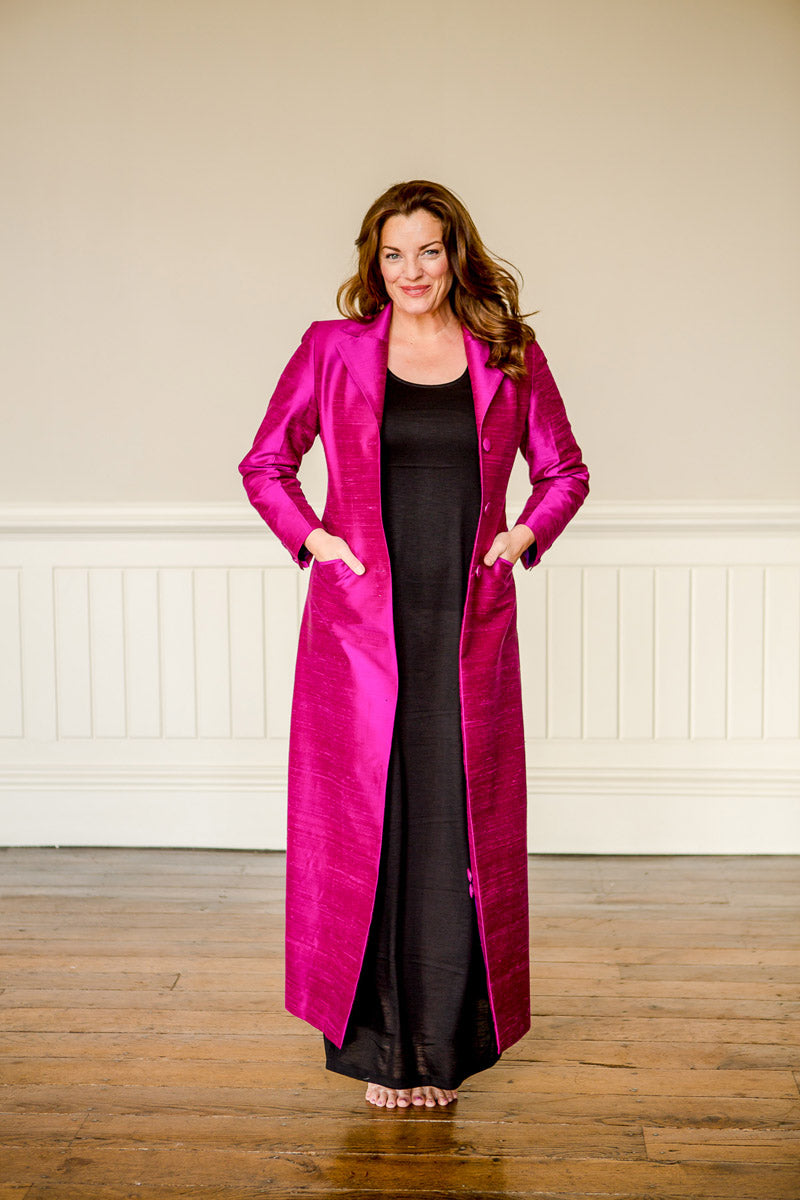
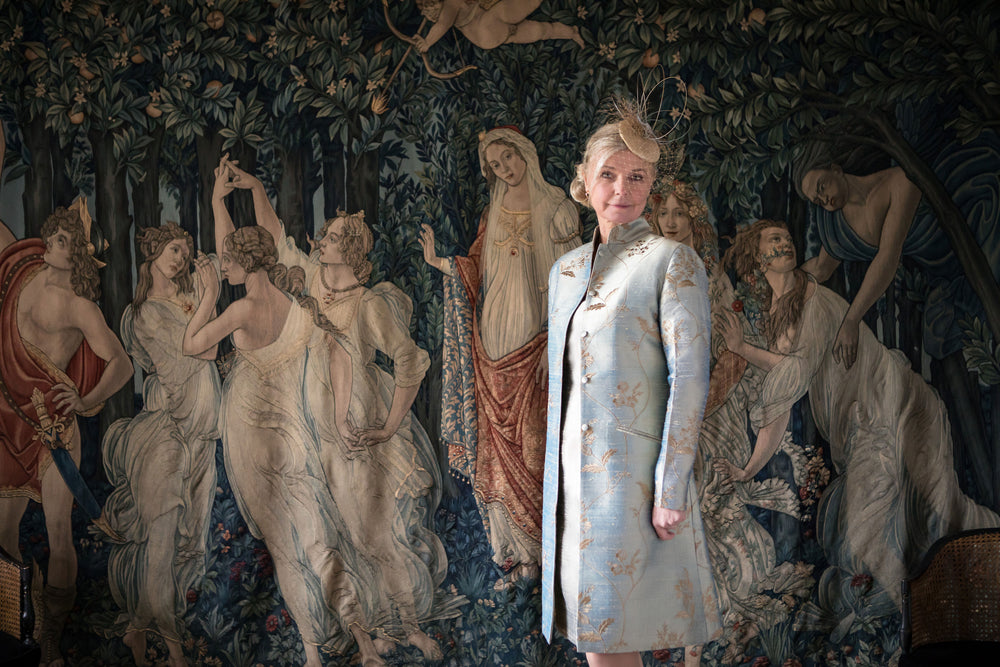
P.s We know this model is wearing no shoes. It was a hot day on the shoot! You need shoes for the opera. Lol

What Should Women Wear to the Opera?
There is no single Shibumi formula for opera dressing. A silk dress may feel exactly right for one woman, while another may feel far more herself in beautifully cut trousers and a statement jacket.
The Timeless Silk Dress
A classic Shibumi Silk Shift Dress is particularly easy to adapt to different types of opera evening.
Available in raw silk and embroidered silk, the simple silhouette provides a starting point that can be made more or less formal depending on the coat or jacket worn with it.
A plain raw silk dress does not need embroidery to look smart. Rich colour and the character of the fabric can be enough on their own. Alternatively, keeping the dress plain and adding an embroidered silk jacket or coat can create interest without making every part of the outfit compete.
Shibumi women's styles are available across UK sizes 6–26, with bespoke length and sleeve options available depending on the design.

Silk Trousers and a Statement Jacket
Trousers can be every bit as appropriate for the opera as a dress, and they are particularly useful when comfort while sitting matters.
For opera dressing, we particularly like the Atelier Trousers and Silk Palazzo Pants.
The Atelier Trousers work well with a shorter jacket such as the Phoenix Jacket or Juna Jacket, keeping the proportions balanced.
Silk Palazzo Pants are beautifully suited to the Willow Silk Top, and can be worn with a Bhumi Jacket or Nehru Jacket. They also sit particularly well beneath a full-length Devi or Aquila Coat, creating a fluid outfit underneath the stronger line of the coat.
For this occasion, we would generally choose these styles ahead of the more fitted Silk Cigarette Trousers, particularly where the evening involves plenty of sitting and standing.

The Lucie Dress
The Lucy Dress offers plenty of scope to make the outfit your own.
Wear it simply on its own or add a Juna, Phoenix or Anya Jacket. Where appropriate, sleeves can be added through Shibumi's bespoke service, and the Lucy can also be made at full length for a more formal evening look.
It is a good example of why an opera outfit does not need to come from a completely separate category of eveningwear. Sometimes it is simply a question of taking a shape that already suits you and adapting it for the occasion.

The Shibumi Opera Coat
A statement silk coat is one of Shibumi's most distinctive approaches to occasion dressing, and the opera is a natural place to wear one.
Rather than simply acting as something to put over an outfit, these coats form part of the outfit itself.
The Signature Shibumi Collar
The Anya, Bhumi, Lyra and Devi belong to the same recognisable Shibumi design family, sharing the curved collar while changing in length and aspects of construction.
It gives you several ways to create a similar feeling depending on how much drama you would like.

Devi Coat
The Devi is full length and is a longer relative of the popular Lyra style.
Designed to be worn open, it has the character of an elegant frock coat and is one of Shibumi's most dramatic choices for an evening at the opera. For Glyndebourne or another occasion where you want to make more of an entrance, it is a natural place to start.

Lyra Coat
The Lyra gives you the same family resemblance and curved collar in a shorter silhouette.
It is a lovely choice when you want the impact of a Shibumi silk coat without going full length.

Aquila Coat
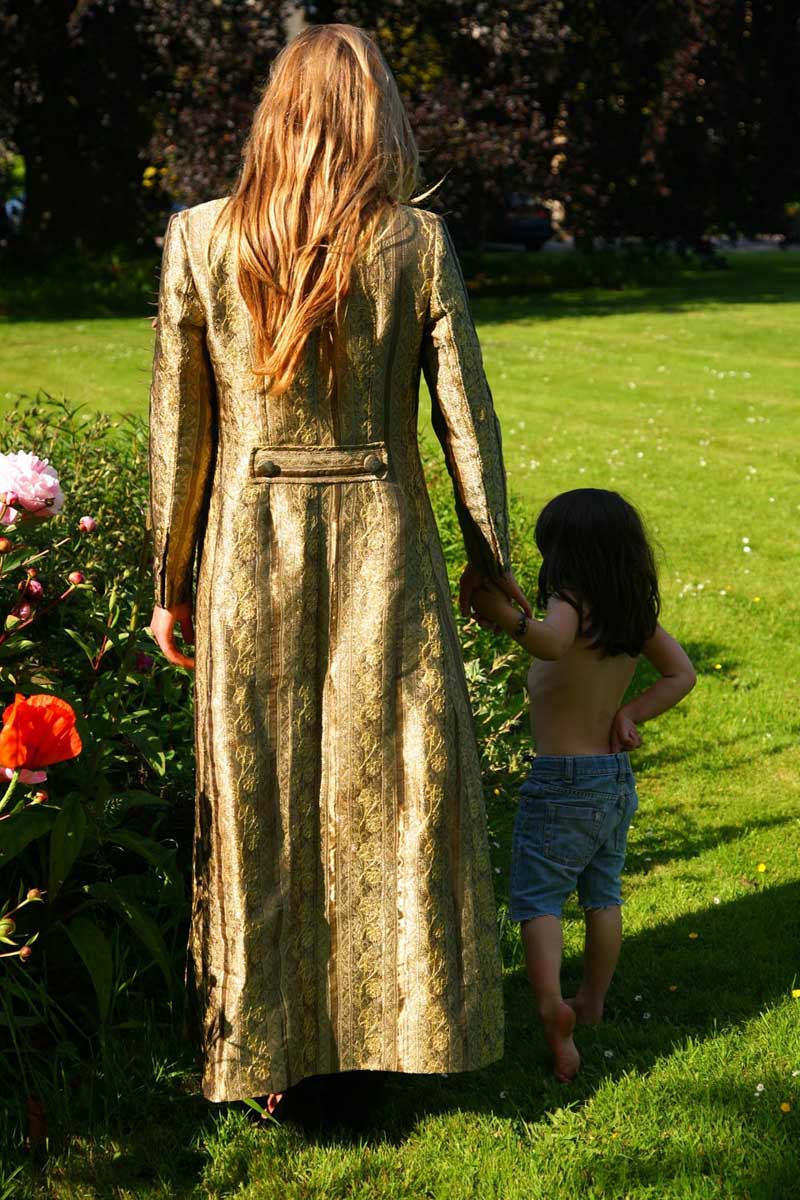
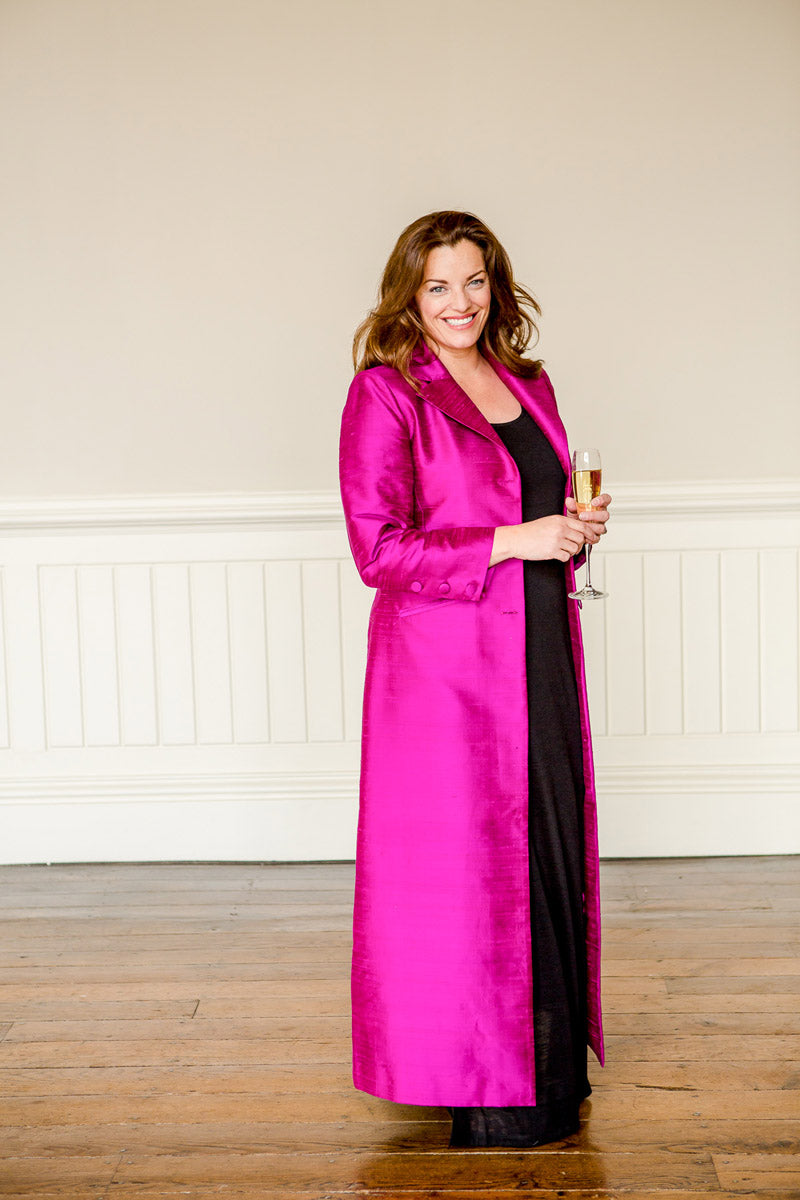
The full-length Aquila takes a more classically tailored approach, with its revere collar distinguishing it from the curved-collar Devi.
It works particularly well where the occasion calls for something more formal, including Glyndebourne.

Grace Coat and Sicily Jacket
The Grace Coat offers a shorter interpretation of the Aquila family.
Shorter again is the Sicily Jacket, which shares stylistic details including lapels, pockets, buttons and a small half-belt at the back.
Together, these different lengths allow you to choose how much of the outfit you want the coat or jacket itself to define.
For the full-length styles, one of our favourite combinations is Devi or Aquila with Silk Palazzo Pants and a Willow Silk Top. The simplicity and movement underneath allow the coat to remain the focus.
What Should Men Wear to the Opera?
For most regular British opera performances, men do not need to wear black tie. At the Royal Opera House, there is no formal dress code for an ordinary performance.
That gives you considerable freedom to choose something a little more individual.
Men's Nehru Jackets
A Shibumi Nehru Jacket is one of our favourite approaches to opera dressing for men.
Available in a wide variety of colours, plain silks, embroidered silks and fabrics, it can be worn with your own smart trousers to create an outfit that feels appropriate for the evening without simply repeating conventional tailoring.

Shibumi Blazers
For someone who prefers a more familiar tailored silhouette, a Shibumi Blazer provides a classic starting point while introducing Shibumi colour and fabric.
Wear it with your own appropriate trousers and allow the jacket to carry the character of the outfit.

Waistcoats
A Classic Waistcoat or Nehru-style Waistcoat is another way to introduce silk, colour, texture or embroidery without choosing a full statement jacket.
They can work particularly well for someone who would like a smaller touch of Shibumi within a more traditional evening outfit.
Shibumi does not currently sell men's trousers, so our jackets and waistcoats are designed to be styled with trousers already in your wardrobe.

Choosing Colour and Fabric for the Opera
Black may be traditional eveningwear territory, but there is certainly no reason your opera outfit needs to be black.
Colour, silk, embroidery and texture all feel at home in this setting. The important thing is to choose them because you enjoy wearing them, rather than because you think the opera demands a particular look.

Raw Silk
Raw silk brings structure, depth of colour and an understated quality to an outfit. A beautifully coloured raw silk dress, coat or jacket can have plenty of presence without additional pattern.

Embroidered Silk
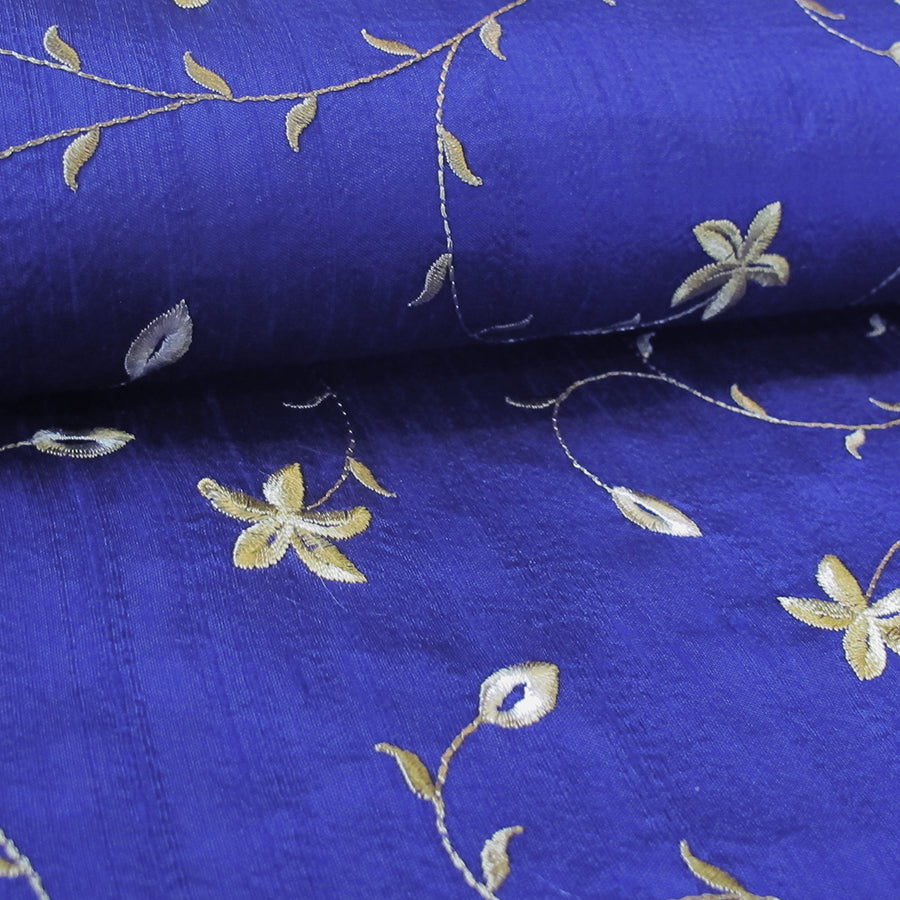
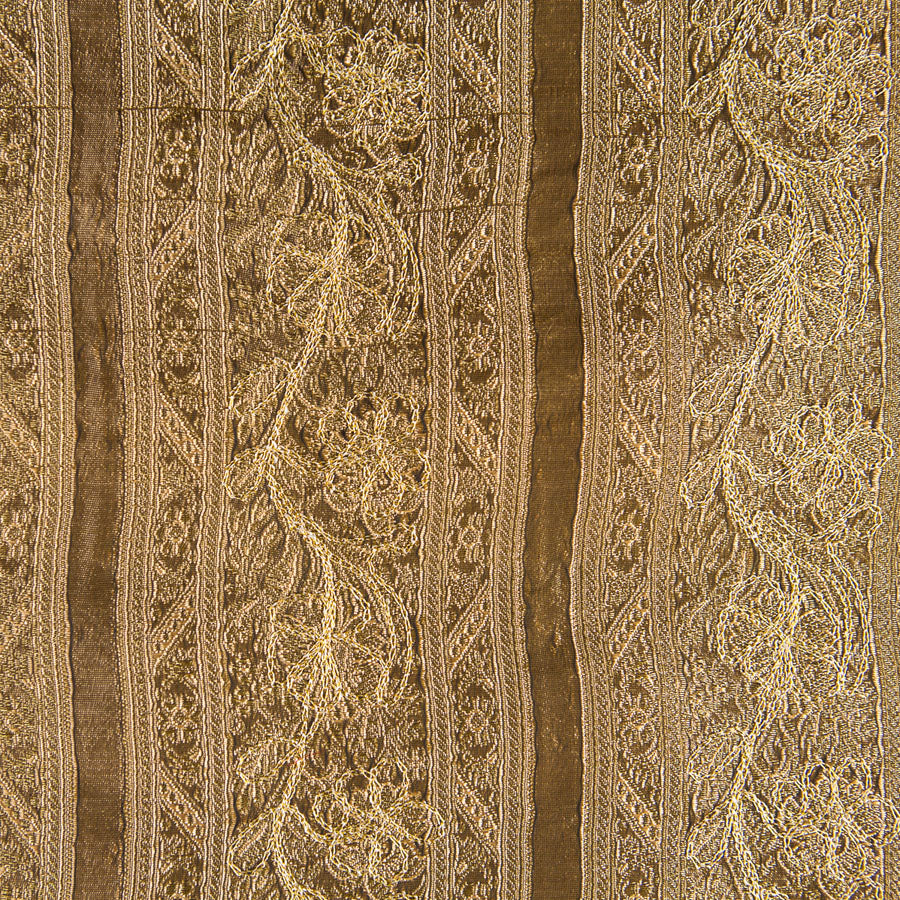
Embroidered silk introduces pattern, texture and visual interest.
It is particularly effective in a jacket or coat, where the embroidery can become the focal point of the outfit. Pairing an embroidered piece with plain raw silk is often more interesting than trying to make everything match.
A simple raw-silk dress with an embroidered jacket or coat is a particularly Shibumi way to approach evening dressing.
Cashmere & Silk
For customers who prefer something softer and more fluid, Shibumi's cashmere-silk offers a different character from the more structured silks.
It appears across styles for both women and men and can work particularly well where you want a less structured feel.

What to Wear to the Opera in Spring and Summer
Spring and summer lend themselves naturally to raw silk, silk dresses and lighter separates.
A Willow Silk Top with Palazzo Pants is an easy starting point, while lighter jackets can be added according to the occasion. For Glyndebourne Festival, the season is also an opportunity to embrace the full occasion, including the longer Devi and Aquila silhouettes where that suits your style.

What to Wear to the Opera in Autumn and Winter
For autumn and winter, full-length coats, richer colours, embroidered silk and cashmere-silk offer plenty of possibilities.
Layering can form part of the outfit rather than simply being practical. A silk dress or trouser combination beneath a statement coat allows colour, texture and different lengths to work together.
The aim is not to create a prescribed "winter opera uniform", but to choose pieces that suit the season while still feeling like you.

Bespoke Opera Outfits and Shibumi Sizing
An opera outfit should work around you, rather than asking you to fit yourself around an idea of what evening wear ought to look like.
Shibumi women's styles are available across UK sizes 6-26, and depending on the individual design, our bespoke service can adapt elements such as garment length, sleeve length, adding sleeves and other fit or style details.
The Lucie Dress, for example, can be bespoke made at full length, while sleeve adaptations may be possible on relevant styles.
If you are unsure how a particular dress, jacket, coat or pair of trousers might work for you, the Shibumi showroom and bespoke service can help you put the complete outfit together.